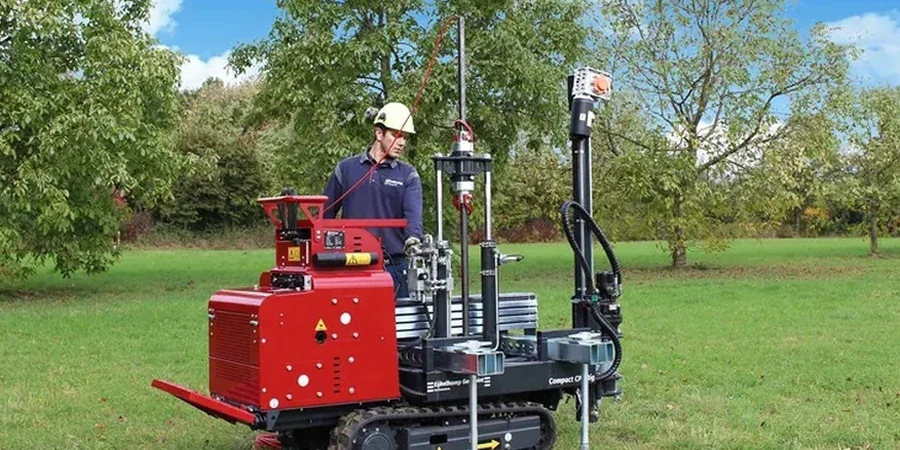
Miami sits at roughly 6 feet above sea level. That elevation shapes every foundation decision here. The oolitic limestone underneath is unpredictable. Voids dissolve. Layers pinch out. A standard SPT can miss these transitions. The CPT test captures them in a continuous profile. We run cone penetration testing from Homestead to Miami Beach. The data stream is immediate. Tip resistance. Sleeve friction. Pore pressure. All logged at 2-centimeter intervals. No gaps. No guessing. For high-rises near Biscayne Bay or warehouses in Doral, this resolution reduces geotechnical uncertainty. Miami's building code under IBC requires soil parameters that CPT delivers directly. We've seen projects where a single CPT sounding saved weeks of re-design after discovering a soft lens at 15 feet. That's the value of continuous data in this city's karst terrain.
Continuous CPT profiling in Miami's karst limestone reveals cavities and soft zones that discrete sampling methods routinely miss.
Common questions
How much does a CPT test cost in Miami?
A single CPT sounding in Miami typically ranges from US$160 to US$280 per test, depending on target depth, mobilization distance, and whether piezocone or seismic modules are needed. Deep soundings over 80 feet or sites requiring traffic control in downtown Miami push toward the upper end. We provide a fixed price after reviewing your site address and required depth.
Can CPT replace SPT borings for Miami foundation design?
In many Miami projects, CPT can reduce the number of SPT borings but not eliminate them entirely. The cone penetration test gives continuous soil behavior type and strength data, but it does not recover a physical sample. For environmental assessment or visual classification of Miami's urban fill, you still need at least one soil boring. We design combined investigation plans that use CPT for detailed profiling and SPT for sampling at key depths.
How deep can you push a cone in Miami's limestone?
Refusal happens when the cone hits competent Miami limestone. This can occur anywhere from 5 feet to 40 feet depending on your location. In areas like Coral Gables or Pinecrest where the rock is shallow, we often reach refusal quickly. In coastal barrier island sand or western basin fill near Krome Avenue, we routinely push to 100 feet or more. The rig's reaction weight and the rock's porosity determine the limit.
What parameters does CPT give for liquefaction analysis?
Cone penetration testing provides normalized tip resistance and friction ratio at every depth. These feed directly into the Boulanger and Idriss CPT-based liquefaction triggering procedure. We extract the cyclic resistance ratio profile from your CPT data and compare it to the seismic demand from the ASCE 7 design earthquake. Miami's shallow water table makes this analysis mandatory for any project in alluvial or fill soils near the coast.
How long does a CPT test take on a Miami site?
A standard 60-foot sounding takes about 30 to 45 minutes of push time. With setup, breakdown, and pore pressure dissipation tests, expect us on site for 1.5 to 2 hours per hole. We send preliminary qc and fs logs the same day. The full interpreted report with soil behavior type, equivalent SPT N-values, and engineering parameters follows within 48 hours.