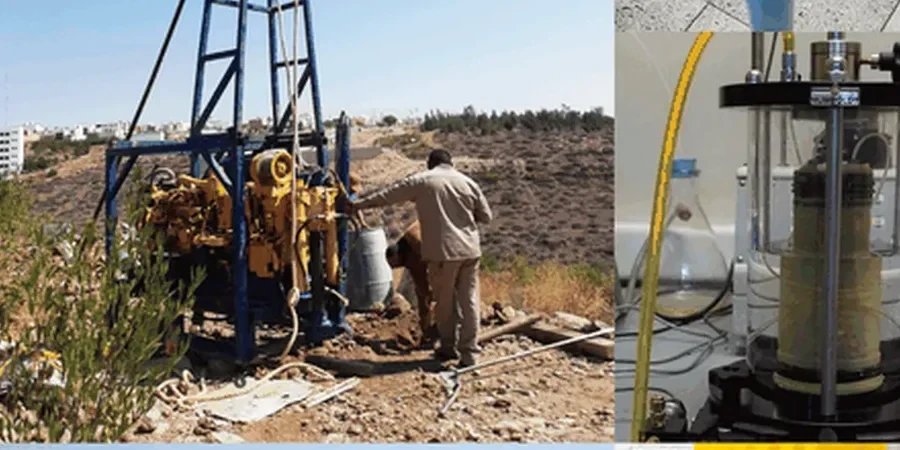
For any deep foundation or ground improvement project in Miami, the International Building Code (IBC) and ASCE 7 standards mandate a design basis that accounts for the region's unique subsurface profile—predominantly loose, saturated sands overlying oolitic limestone. The design of vibrocompaction here is not a generic application; it demands a granular understanding of local depositional environments, from the Atlantic Coastal Ridge to the transverse glades, where groundwater sits barely three feet below the surface. Our engineering team integrates site-specific CPT test data with ASTM D2487 soil classifications to develop a vibrocompaction grid that achieves the required relative density, mitigating differential settlement before it becomes a structural liability. We focus on delivering a technically sound design package that contractors can execute with precision, ensuring the compacted ground mass meets the performance criteria specified in the geotechnical baseline report.
In Miami's high water table, vibrocompaction design is less about adding energy and more about controlling pore pressure dissipation to achieve uniform densification.
How we work
Miami sits at an average elevation of just 6 feet above sea level, a fact that dominates every geotechnical decision below the water table. Effective vibrocompaction design hinges on quantifying the in-situ state of the sandy matrix, which we establish through rigorous pre-treatment
SPT drilling correlated with published relationships from Seed and Idriss. Our design parameters specify probe spacing—typically on a triangular grid of 6 to 10 feet—vibrator power in the 150 to 180 kW range, and backfill gradation to ensure vertical drainage paths.
Because Miami's urban infill projects often encounter construction debris within the target zone, we often pre-qualify the technique with a
test pit program to confirm subsurface clearance. The design output includes isopach maps of densified zones, predicted settlement reduction factors, and QA/QC protocols aligned with ASTM D1586 for post-treatment verification borings.
Common questions
What is the typical cost range for vibrocompaction design in Miami?
For a standard commercial lot in Miami, the vibrocompaction design phase—including site characterization, grid design, and QA/QC specifications—typically falls between US$1,610 and US$5,210 depending on project complexity, site access, and the required number of pre-treatment borings.
How does the high groundwater in Miami affect vibrocompaction design?
The shallow groundwater, often at 3 feet below grade, aids the process by reducing intergranular friction during vibration, but it requires careful management of pore pressure dissipation. Our designs incorporate specific pause intervals and sometimes predrainage to prevent soil fracturing.
How do you verify that the vibrocompaction design achieved the required density?
We specify post-treatment SPT borings per ASTM D1586 at the centroid of the compaction grid, comparing the pre- and post-treatment blow counts. Acceptance is based on achieving a minimum relative density, typically 70% or greater, as outlined in the project specifications.
Can vibrocompaction be used near existing structures in Miami?
Yes, but it requires a vibration monitoring plan. Our designs establish exclusion zones and peak particle velocity (PPV) limits based on the structural sensitivity of adjacent buildings, using scaled-distance equations to adjust vibrator frequency and amplitude.
What are the design alternatives if vibrocompaction is not feasible?
If the fines content exceeds 15% or the site contains thick organic layers, vibrocompaction may not be effective. In those cases, we evaluate alternative designs such as stone columns or rigid inclusions, which are better suited to cohesive Miami soils.