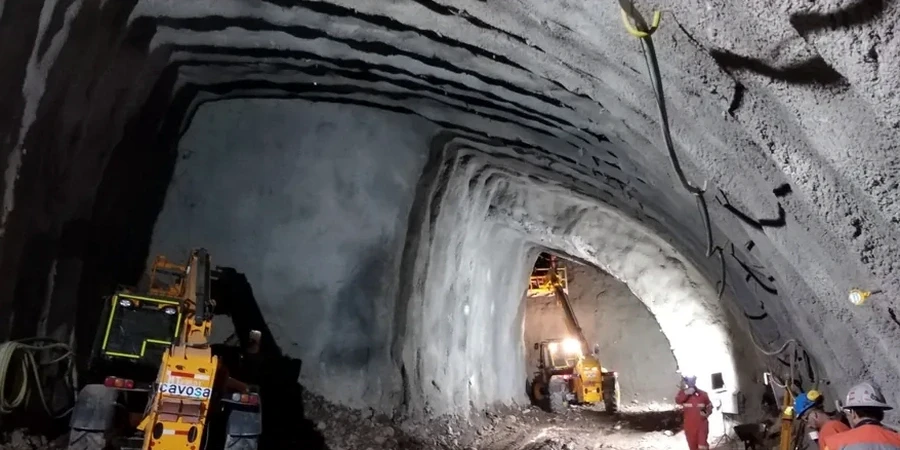
Miami's coastal geology presents a unique paradox for underground construction. The surface appears solid, but just a few feet down, the oolitic limestone gives way to pockets of soft marl, saturated sand, and organic silts. This is the Biscayne Aquifer, a porous limestone layer where groundwater sits barely four feet below street level. Tunneling through this mix requires more than standard soil tests. The team analyzes pore pressure, face stability, and the risk of raveling before any TBM enters the ground. For preliminary site characterization in the surrounding uplands, we often integrate test pits to visually map the caprock thickness, a critical step before defining the tunnel alignment.
A tunnel face in Miami's soft ground can transition from stable to flowing in minutes—real-time pore pressure monitoring is not optional, it is survival.
Common questions
What is the typical cost range for a soft soil tunnel analysis in Miami?
The cost varies significantly based on the tunnel length and the complexity of the karst geology. For a comprehensive campaign including lab testing, field investigations, and numerical modeling, the budget typically falls between US$4,410 and US$18,280 for the initial alignment phase.
How do you handle the high groundwater in the Biscayne Aquifer?
We prioritize pore pressure characterization using vibrating wire piezometers. The analysis focuses on required face pressure to counteract hydrostatic forces and the evaluation of grouting effectiveness to reduce inflow before excavation.
Can you analyze the risk of sinkholes during tunneling?
Yes. We map the subsurface profile in detail, looking for raveling zones where sand overlies limestone cavities. The analysis predicts the potential for chimney-like failure propagating to the surface, which is a major risk in the Miami area.
What lab tests are essential for Miami's soft limestone?
Point load tests for quick rock strength, consolidated-undrained triaxial tests on the soft marl layers, and slake durability tests to assess how the material degrades with moisture. Grain size analysis is also run on the interbedded sands.
How long does a typical tunnel alignment study take?
An initial desk study and field reconnaissance can take two to three weeks. The full subsurface investigation, including lab work and a geotechnical baseline report, generally requires six to ten weeks depending on the city permitting for drilling locations.